Synastry Overview
Synastry & Relationship Astrology
Synastry is the art of relationship Astrology. It is a fascinating and illuminating study of how individuals interact with one another.
Each individual is born with a personal birth chart, which is a map of the heavens for the moment they took their first breath. Some might say the 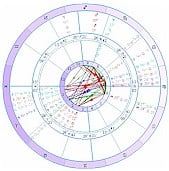 birth chart has the effect of stamping, or imprinting, the energies of the planets and signs on an individual.
Each and every one of us has all 10 planets and luminaries in our charts, but their positions by sign, house, and aspect are individual to each. When we interact with others, the individual energies of our natal charts form special relationships with their individual energies. The resulting interplay is as complex and unique as our own personalities.
Many of us are familiar with the study of Sun Sign Compatibility. Some will ask, for example, “Does a Leo get along with a Scorpio?” While these comparisons have some value, they are very general. Many other factors are involved when evaluating the compatibility of two people.
Although Synastry is complex, we can turn to some especially useful methods of studying relationships that will help shed light on our interactions. Below are some valuable pointers.
Venus is the Goddess of Love.
Most of us are familiar with the significance of Venus in mythology. Venus, the goddess of love, provides us with valuable insights into how we approach matters of the heart. Venus rules romantic love, but it also plays a role in our pleasurable attachments in a more general sense.
Many of us have experienced attractions to people that we don’t entirely understand. The art print at right is a sweet and humorous depiction of a girl who is trying to resist Cupid’s arrow. Why do we fall for people? Sometimes, our attractions make sense. Other times, our attractions seem entirely irrational.
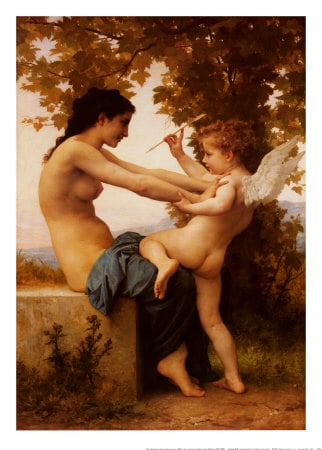
From the article, Synastry: Love and Relationship Astrology
Turning to Astrology, and more specifically, Synastry, will help us find answers. Venus rules attraction. Although other factors are involved, Venus is the planet of pleasure, romance, and union. Venus is particularly important in Synastry, and Venus interaspects are common with couples who enjoy a long-lasting and significant union.
Look to Venus in each person’s chart to see how each individual approaches, views, and handles love and relationship. Compare the natives’ Venus signs, noting the similarities and differences. (For Venus sign comparisons click here.) Then, determine if Venus makes an aspect to the other’s planets, luminaries, or angles (such as the Ascendant). When Venus in one chart aspects planets and points in another, the Venus person tends to get idealized and romanticized. The person with the contacted planet tends to expect a lot from Venus.
Venus in Synastry:
Venus-Sun interaspects:
These are helpful aspects in any relationship. They create a sense of harmony and offer some common interests to the partnership. The Sun person feels more loving and beautiful in the presence of the Venus person. The Venus person finds the Sun person quite charming and intriguing.
There is a mutual attraction here that, on its own, is not as insistent or sexual as other indicators (such as Venus-Mars or Venus-Pluto). Perhaps the most apt keyword for this combination is contentment. The more difficult aspects (opposition, square, and quincunx) can point to some problems and discord. The value system of the Venus native, in this case, is at odds with the Sun native’s general outlook and life path. Each person tends to over-indulge the other at times, and frustrate one another the next day. Read more details about Venus-Sun aspects in synastry.
Venus-Moon interaspects:
These aspects smooth out many of the more difficult aspects in a relationship. Although these relationships are not immune to ups and downs and disagreements, the presence of this aspect in synastry creates an overall sense of harmony and compatibility.
The attraction here has less to do with sexuality than it does with familiarity. These people have a strong need to set up house together and spend as much time with each other as possible. It is an aspect that almost demands physical presence–these people feel the need to be around each other, even if they are not interacting. They enjoy each other’s company, and there is often a fair share of tenderness and care between one another.
When challenging, the Moon person may at times find the Venus person a little too playful at the expense of his or her own feelings. The Venus person may be tempted to turn on the charm when the Moon person is having problems instead of sincerely confronting and resolving problems. Glossed-over problems can undermine the integrity of the relationship and of the emotional commitment. Read more details about Venus-Moon aspects in synastry.
Venus-Mercury interaspects:
These interaspects are helpful for creating some common interests between the individuals. These people may enjoy happy exchanges and pleasurable, shared activities. Generally, there is a lot of “talk” in the relationship. Hard aspects (opposition, square, and quincunx) point to misunderstandings that disrupt the flow of the relationship. There can be complaints that each person talks a little too much. There is such a strong desire to communicate with each other stimulated by these aspects that it can sometimes seem like each person is vying for the stage, or the chance to speak. Read more details about Venus-Mercury aspects in synastry.
Venus-Venus interaspects:
The conjunction, sextile, and trine point to compatibility in relationship values and styles. There can be a wonderful feeling of ease and comfort with each other.
With the trine and sextile, although the partners’ individual styles of expressing love and affection are different, they are similar enough to feel much in common, and dissimilar enough to keep things interesting and dynamic. It is easy to be romantic with each other without feeling like they have hurt their partner’s feelings with a style that is too aggressive or too passive, too intimate or too impersonal, and so forth.
The quincunx creates a stimulating attraction, albeit a frustrating one at times.
The opposition and square both point to attraction, but the attraction can be a frustrating one at times. The friction is caused by a lack of understanding due to different styles and needs in love, and the result can be both individuals feeling unappreciated. Partners should make every attempt to look beyond the style of relating and into each other’s hearts. Read more details about Venus-Venus aspects in synastry.
Venus-Mars interaspects:
These are classic aspects, although they can be rather troublesome. Any aspect between these planets in synastry points to sexual and romantic attraction. Sexual magnetism of an insistent quality is found in the conjunction. Sextiles and trines produce attraction that is not as insistent or competitive as the hard aspects. Rather, the attraction is smooth and pleasant. However, the square, opposition, and quincunx can cause friction at the same time. There is considerable attraction, but over time, this sexual energy can become disruptive when left unchecked.
Remember that the more difficult aspects have great value in that they stimulate people. Arguments often augment the sexual act in some way. The square tends to be the most troublesome interaspect between Venus and Mars—sexual attraction exists and is powerful, but sex is often delayed as the couple tends to engage in arguments that take time to work out before they do what they really want to do. Here, sex is probably the root of the arguments, even if this is not immediately apparent.
These couples may try to resolve this conflict by attempting to consciously let down their defenses, turn off their egos, and just have sex. This way, they may find that they have much less to argue about. The reason for this is that the square gives tremendous physical attraction and tension that is very often disguised and mis-channeled. The Venus person is easily hurt or offended by Mars. At times, the Mars person’s direct approach is fully appreciated, but other times, the Venus person is offended by it. Read more details about Venus-Mars aspects in synastry.
Venus-Jupiter interaspects:
These aspects are generally quite helpful in any relationship. The presence of flowing aspects between these planets in synastry can help smooth out any relationship. Forgiveness is a key strengthening factor with this interaspect. See the discussion of Jupiter in Synastry below for more details. Also: Read more details about Venus-Jupiter aspects in synastry.
| When Venus contacts the outer planets—Saturn, Uranus, Neptune, and Pluto—you will find very dynamic interactions that evolve over time. When a relationship lasts long enough to let these energies play out completely, increased understanding and connection are possible. |
Venus-Saturn interaspects:
When challenging, these interaspects can be difficult to deal with, but effort put forth to understand the interplays will result in enormous increases in understanding of the partners both individually and as a couple. There is often a strong need to be with each other. With the troublesome aspects (opposition and square), the sexual relationship may start out just fine, but later can become unpredictable, stunted, or sporadic. Spontaneity is lost, and this is generally due to power struggles in the day-to-day life of the couple.
The Venus person often feels oppressed and restricted by the Saturn person. In fact, Venus may feel criticized and nagged, and Saturn may feel an unhealthy need to control and restrict the Venus native. This general conflict can lead to problems in the bedroom. With the sextile and trine, however, there is a steady and stable quality to the love and affection for each other, but some reserve or self-consciousness regarding the expression of feelings, romantic desires, and sexuality is present nevertheless. Read more details about Venus-Saturn aspects in synastry.
Venus-Uranus interaspects:
These aspects offer excitement and thrills. The problem with this aspect, which is most apparent when the aspect is a conjunction, square, opposition, or quincunx, is that there may be an overall dissatisfaction with each other. Although sex can be especially exciting—even ecstatic—with each other, the partners may easily become restless, as there is an unsettled feeling between the natives that is persistent.
When one person (especially Venus) is feeling romantic and loving, the other person (usually Uranus) is distant. When the interaspect is a flowing one (sextile or trine), the relationship may also be somewhat erratic, but this quality pleases both individuals. They may delight in the fact that their partnership is a little offbeat, and never dull! Read more details about Venus-Uranus aspects in synastry.
Venus-Neptune interaspects:
These aspects are evolving and involving. They tend to play out over time in different ways. At first, the relationship is all-consuming. There is a feeling of soul connection. Slowly, realities surface themselves. Things do not seem as wonderful as they first appeared. Many couples with these aspects in synastry can overcome these little letdowns, as long as they let the relationship play out long enough.
Eventually, they may find that the feelings come full circle. The difference is that they will come to realize that while what they loved the other person for at the outset of the relationship may not have been based on reality, they have the huge potential to love each other for who they really are. The difficult aspects (opposition, square, and quincunx) can result in disappointment and bitterness. Read more details about Venus-Neptune aspects in synastry.
Venus-Pluto interaspects:
These aspects point to intense and magnetic attraction. They figure strongly in relationships that are long-lasting and significant. Love with these people is intense and transforming. This interaspect demands physical presence. When the natives are apart from each other, jealousies can arise. The difficult aspects generally play out as an emotional rollercoaster ride, with extreme swings from loving intensely to antagonism.Read more details about Venus-Pluto aspects in synastry.
Venus-Chiron interaspects:
These aspects are powerful indeed. Look for the conjunction, trine, and sextile, in particular, as an indicator of true love. There is a healing quality to the relationship—one in which the natives feel that the love they have can heal the wounds they might have accumulated in relationships past. These people feel a strong need to be together, set up house together, and go the distance with each other. There can be a true feeling of joy in the love they share with one another. When the aspect is challenging, however, there can be irrational behavior and reactions to each other that are based on wounds of the past, carried forward into the present relationship.
Jupiter in Synastry
When Jupiter in one person’s chart forms aspects with a personal planet or Ascendant in their partner’s chart, a special relationship is formed. The Jupiter person tends to give the other person the benefit of the doubt. Jupiter sees the good in the area of life and energy of the other’s contacted planet. Jupiter doesn’t tend to blind itself to the negative (that is Neptune’s job!). It simply searches for the positive, and finds much to like about the person.
You can think of the Jupiter taking on the role of a loving father who naturally finds goodness in his child. This is not the kind of father who refuses to see the “bad”, or who totally glorifies or idealizes his child. In fact, Jupiter is quite likely to see the negative, but he only wants to see his child grow, and easily excuses the less desirable traits, preferring to think that the good outweighs the bad. He is unthreatened by the child’s behavior. The Jupiter person in synastry wants to help out, cheer up, and encourage the other person. Jupiter gets the most pleasure when he sees his loved one grow.
Therefore, if Jupiter contacts another person’s Moon, the Jupiter person will find the Moon person’s expression of his emotions, family values, and natural habits really quite wonderful and pleasing. Jupiter will encourage Moon to emote, to feel, and to seek security. Jupiter will have a strong need to protect the Moon person.
When Jupiter contacts Venus, a pleasing attraction occurs between the two individuals. In the final analysis, Jupiter will give the Venus person the benefit of the doubt at all times. Jupiter will forgive, and even forget. Under Jupiter’s influence, the Venus person will feel free to express his or her relationship needs, desire for pleasure, and romantic inclinations. The two will have a grand time, full of natural humor and enjoyment. There is a strong desire for peace, and forgiveness comes very easy. If the aspect is troublesome, they may also encourage each other to over-indulge. This is when Jupiter becomes the indulgent father. The desire to see the other person enjoy life may be taken a little too far.
Jupiter aspects in synastry are generally very helpful. While other difficult aspects may exist in synastry, overall goodwill between the individuals will outlast the conflicts. At the very least, even if these two end up parting, they will do so on good terms, remaining special friends.
Mercury in Synastry
Mercury cross-aspects and interactions deserve some attention in any study of the dynamics of a relationship. See our article, Mercury in Synastry for more information.
Mars is the God of War
Mars, in relationship astrology, is the planet of sexual expression and desire. It shows us our animal instincts. While Venus rules romantic attraction, Mars indicates a more animal need for sex and assertion. It is important to note that Mars in synastry does not point to the need to be together forever. But, if other indicators of love and relationship are already present in synastry, strong Mars connections will help (or hinder) the relationship, mostly in the bedroom.
When powerful interaspects of Mars occur, sex may not be as ecstatic and rich as those indicated by Venus, but it may be quite satisfying on a basic body level. When Mars figures strongly in synastry, but the aspects involved are quite difficult, the couple may find a lot to argue about.
Even though Mars aspects may not bring together people in the first place, they have a lot of value. The conflict that they bring to a relationship can be difficult at times, but invigorating as well. If the individuals are growth-oriented, the basic truths that Mars interaspects bring will contribute to overall satisfaction. When Saturn is not involved, this couple will argue, and the growth that they pull from the conflict will likely spur them to have great sex together.
Mars-Sun interaspects generally highlight action and physical attraction. The difficult aspects can indicate a passionate relationship that is filled with conflict. Mars-Moon interaspects can be very sexy and sometimes volatile. Emotionalism and domestic arguments can figure strongly in such a relationship when the difficult aspects are involved. Mars-Mercury interaspects, when flowing, indicate passionate and stimulating conversations. When difficult, regular discussions quickly turn into arguments. The Mars native may show insensitivity to the Mercury native’s point of view. Mars-Neptune aspects are generally indicative of sexual attraction, which can be disruptive and variable if the aspects are difficult. Mars-Pluto interaspects are similarly stimulating, though more intensely so. Difficult aspects can create battles of wills that threaten harmony.
One of the most difficult aspects to occur between two charts is Mars-Saturn when it is in conjunction, square, or opposition. Unless the partners involved are prepared to work on the relationship with a sincere desire for growth, the tensions, frustrations, and blockages can feel insurmountable. Read more about the challenges of Mars-Saturn in synastry.
Comparing the signs of each individual’s Mars can be illuminating. See our article, Mars in the Elements in Synastry for more information.
The Ascendant in Synastry
The Ascendant expresses our “body ego”—how we express ourselves through our body language and personal mannerisms. It also shows how we cope with the daily demands of life, our first reactions, and how we initiate projects. Naturally, when the Ascendant of one person’s chart contacts the planets (or Ascendant) of another, the reaction is immediate and, often, apparent. While it is common enough that there can be an attraction to the physical body, it is more than likely a reaction to the Ascendant person’s whole body ego—the manner in which he/she comes across, or the “packaging”.
Aspects in Synastry
In Synastry, conjunctions between partners’ planets and points represent a point of powerful interaction. Depending on the planets involved, there can be a strong feeling of similarity and recognition.
The opposition represents polarity and the power of attraction. This can result in a feeling of complementing each other, but it can also bring out feelings of competition and insecurity. There can be a tendency to “see-saw” or “ping-pong” with the opposition—when one person expresses their planet’s energy, the other person counters with their side of the “equation”. There is a countering effect here, and often a feeling of literally being “opposed” or thwarted.
Sextiles and trines (generally considered “flowing” aspects) often suggest an ease at blending the two planets’ or points’ energies. There is often a warm and pleasant understanding and flow. These aspects do not necessarily generate attraction (as a conjunction might), but they are very supportive in a relationship. Trines generally indicate energies that combine well, while sextiles are usually points of compatibility that the couple notice and appreciate.
Squares often point to energies that need work in order to integrate them easily into the interaction. While lack of understanding and frustration can be the result, they can also create just the right amount of tension to produce excitement in a relationship. Growth-oriented individuals will find that these “discordant” energies can spur them to new heights of understanding.
While it is helpful to consider any one interchart aspect carefully, it is also illuminating to consider the signs involved in the interaction. For example, squares between planets occupying mutable signs (Gemini, Virgo, Sagittarius, and Pisces) can point to problems that are expressed in fussiness, restlessness, nagging, and pickiness. Frequent annoyances and irritations, often that skirt the real conflict, are common.
Between cardinal signs (Aries, Cancer, Libra, and Capricorn), conflicts are more likely to be stormy, direct, and overt—occasional big fights are typical. Between fixed signs (Taurus, Leo, Scorpio, and Aquarius), there can be frequent stand-offs. Of course, not all squares occur between planets in the same modality, but these examples serve as a general guideline.
The Sun in the Houses in Synastry: You Light Up My Life
Where does your Sun fall in the natal chart of your partner? See our Sun in the Houses in Synastry article for more details.
Saturn in Synastry
Saturn interaspects can be viewed as some of the “glue” that binds people together, but they can be tricky to manage. Read more about Saturn in Synastry.
More Relationship Astrology topics at CafeAstrology.com
House Overlays in Synastry — see just how important house overlays in synastry are in terms of how each person sees the other and what is expected from the relationship.
Romantic Compatibility Analysis offers a weighting system for various interchart aspects and positions. Essentially, this is a romantic compatibility “score sheet” but it can help you to understand which synastry combinations have more weight in compatibility analysis.
More on Synastry — here we explore more synastry topics and specifics.
Synastry Books Compared — our favorite books on relationship astrology, and why we like them.
Relationship Astrology: Summary of Techniques — we summarize the different ways of studying a relationship from an astrological perspective, and what each method of study means.
The Composite Chart — the chart of a relationship!
The “First Meeting” Chart shows where a relationship is headed, and draws on Electional Astrology techniques.
Relationship Astrology Tips from Annie. This article includes notes on the Nodes of the Moon in Synastry.
Relationship Potential in the Natal Chart discusses some themes to look for in individual natal charts with regards to relationship potential.
Intermediate and advanced students of Astrology might enjoy our article, SoulMate Astrology.
Indicators of Sexual Attraction in Astrology
Don’t know the positions of your planets? Be sure to find out your personal astrology data online, at no cost.